


Citrine – The Merchant’s Stone
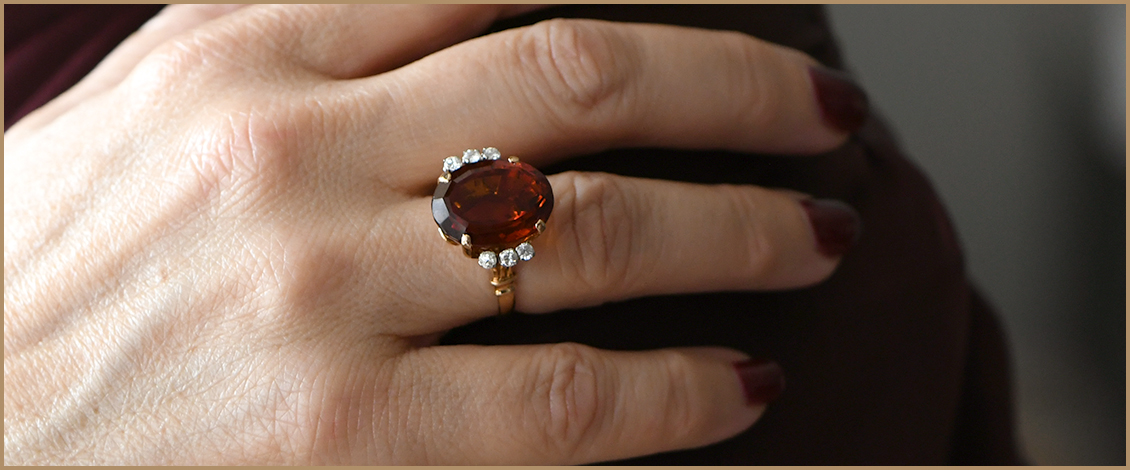
From deep in the mines of Mina Gerais in Brazil, a behemoth rose. The massive citrine emerged in 1990. So large was the rough gem that it sat for nearly two decades, waiting for tools large enough to cut such a massive stone. At last, in 2009, a team of gem cutters in Brazil turned the rough gem into a faceted stone of incredible color and beauty – weighing an astonishing 20,200 carats – nearly nine pounds!
The Malaga Citrine, named for the city intended to showcase the stone, remains the world’s largest internally flawless faceted citrine to date. The 20 x 15 x 10 centimeter gem was destined to be a cornerstone of Spain’s Art Natura museum. However, conflict between the museum’s owner and the Malaga city government forced the museum complex’s closure, and the Malaga Citrine is not on display at this time.
Citrines are produced primarily in Brazil, but are also found in the Ural Mountains of Russia, Madagascar, and parts of Europe. The name citrine comes from the French for lemon, “citron,” due to the lemony shade of many citrines. Citrines have also been referred to as the “merchant’s stone,” “money stone,” or “abundance stone,” as its golden color was thought to attract wealth, riches, and prosperity. Ancient Greeks and Romans carved citrine into ornaments and talismans.
Scotland also boasts citrine as a native stone. Scots incorporated the stone into kilt pins, brooches, and even weapon handles. Queen Victoria, great lover of all colorful jewels, wore citrine at her Balmoral residence. The queen was also famous for gifting citrines and encouraging guests to wear them to her Scottish castle gatherings.
Queen Victoria is not the only royal to delight in the golden glow of citrines. Queen Maxima of the Netherlands wears an extensive collection of citrines. Queen Sirikit of Thailand and Queen Sonja of Norway also count citrine tiaras in their respective crown jewels.
The Art Deco period was the pinnacle of citrine’s popularity. Cartier crafted an exquisite citrine tiara for the coronation of King George VI in 1937. Celebrities and socialites, including actresses Joan Crawford and Greta Garbo, wore glittering collections of citrine jewels. From cocktail rings to necklaces and beyond, chic society clamored for the sunny, golden gems.
More recently, citrines made the headlines with Angelina Jolie’s donation of an impressive necklace to the Smithsonian’s National Gem Collection, which includes other famous jewels like the Hope Diamond and the Star of Asia Sapphire. Jolie’s gift, part of a collaboration between Jolie and designer Robert Procop, features a 177-carat pear-shaped citrine drop hanging from a necklace of cushion-set citrines. Jolie’s partnership with Procop, The Style of Jolie, donates proceeds to educational charity, Children in Conflict.
Citrines have seen a rise in popularity as consumers gravitate toward bright, cheery colors. The birthstone of November, the range of autumnal orange to lemony yellow provides lots of options for collectors of the stone. You can explore our collection here:


