


Opal – Gift from Heaven
In 1987, a miner working in the opal-rich surrounds of Coober Pedy, Australia made a remarkable discovery: the 7-foot remains of a pliosaur, an aquatic dinosaur from the Jurassic age. What made this fossil more remarkable, however, was its extremely rare condition: the fossil was covered in opal.
Fossilization itself is a rare process; opalization of remains is even more unusual. The majority of fossils occur when cavities inside the remains of a living creature are slowly filled with mineral-rich liquids, resulting in a cast of the remains. This process is called permineralization. In rare instances, the composition of that liquid creates an incredible opalized cast.
The special fossil was sold to an Australian businessman, who partnered with scientists to find, complete, and articulate the whole skeleton. The high cost of conserving the fossil, named “Eric” after a Monty Python song, led to uncertainty for the future of the find. Eric was at grave risk of being sold for the worth of the opal, rather than conserved for research and education. Australians came together, donating enough funds to purchase the remarkable opal fossil for the Australian Museum. Eric the Pliosaur is now safely housed at the museum for future study.
Australia is the world’s leading source of opals, mining up to 97% of the many types. Coober Pedy, the discovery place of Eric, yielded other famous opals. In 1956, Coober Pedy’s Eight Mile Opal Field offered up the world’s largest opal to date, the Olympic Australis, named for the Olympic Games occurring in Melbourne at the same time. 11 inches long and 4 ½ inches wide, the stone weighs an astonishing 17,000 carats. Its estimated value is 1.9 million US dollars.
The Virgin Rainbow is also an opalized fossil from Coober Pedy. In this instance, the gemstone formed in the remains of an ancient ancestor of the cuttlefish. The Virgin Rainbow is a 72 carat, 2 ½ inch long black opal that reflects an amazing array of colors and even fluoresces in the dark.
Indigenous Australians weave tales of opals throughout their legends and mythologies. In South Australia’s Andamooka region, indigenous peoples believe their Creator descended to Earth on a rainbow; where the rainbow touched the ground, opals formed. Other stories describe a Rainbow Serpent who carved the rivers of the land, leaving deposits of opal behind.
Other ancient societies revered the opal as a spiritually or religiously significant talisman. Aztecs tied the opal to Quetzalcoatl, a birdlike serpent deity. Bedouin legends tell of opals falling to earth in lightning strikes. Ancient Greeks believed opals could inspire prophesies and promote health.
Opals have been a favorite of royals and elites since before the Romans began writing about them over two millennia ago. The first opals introduced to the west were probably discovered in what is now Slovakia. Roman author Pliny the Elder wrote a story of Senate intrigue involving Mark Antony and a coveted almond-sized opal he could not acquire. This story’s popularity led to the opal’s unbreakable link to royalty. The tale inspired Napoleon I to gift his wife, Empress Josephine a large black opal named The Burning of Troy. Queen Victoria popularized opals throughout her reign, but especially after large opal deposits were discovered in Australia. Her love of opals sparked King Kalakaua of Hawaii to order a lavish crown created for his coronation covered in jewels and boasting several opals.
Modern royals continue to celebrate this remarkable stone. Queen Elizabeth II was presented with the Australian Opal Spray brooch for her wedding in 1947 and was also given an Andamooka opal necklace and earrings totaling over 200 carats during her visit to Australia in 1954. Younger royals including Queen Maxima of the Netherlands and Queen Mary of Denmark are often photographed in beautiful opal jewels. On the red carpet, actress Helen Mirren wore a stunning set of black opals in a necklace and earrings by Chopard for the premiere of Catherine the Great.
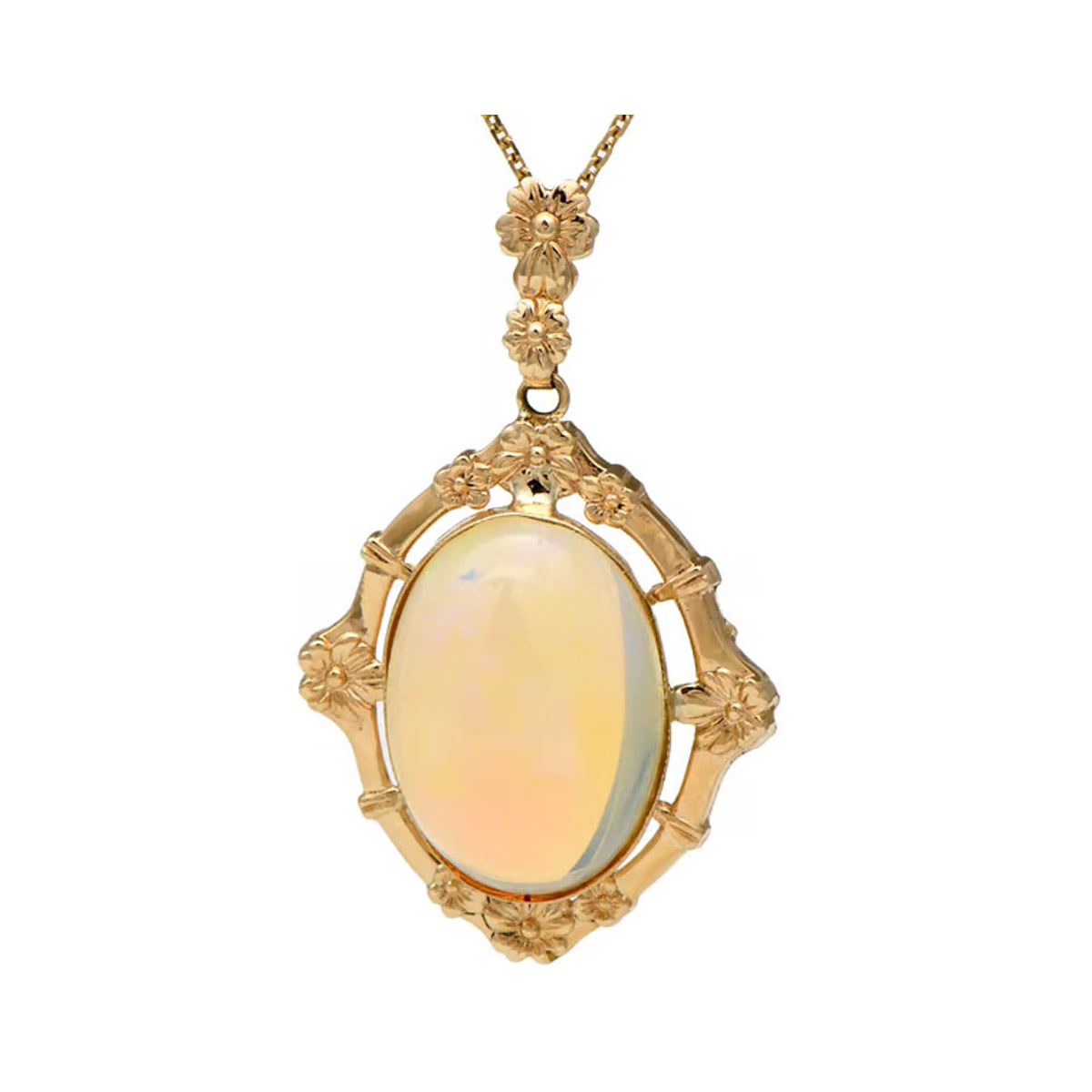
The wide variety of opals and the dazzling colors that dance inside them give this unusual gem a wide appeal. In addition to their variety and versatility, the legends and myths attached to the stone make the gems attractive on a whole other level. If you’re captivated by the mystique of opals or bedazzled by their beautiful colors, you can explore our collection here:



