


Peridot, Gem of Light
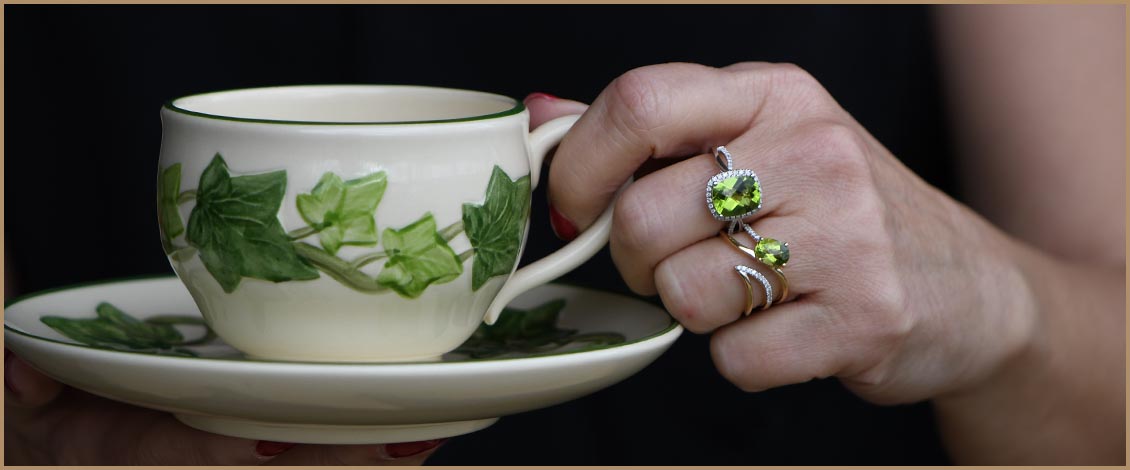
Royal patrols surrounded the perimeter of a fog shrouded island, poised to execute any intruders. The island’s precise location was strictly guarded, as its inhabitants worked day and night, mining a beautiful stone for the Pharoah’s treasury. It was said that, at night, the stone glowed in the miners’ lamplight. Each night, deposits of the precious glowing stones were marked, and by day they would be cut from the earth. This legend describes the mysterious Topazios Island in Egypt’s Red Sea, and the stone with its magical glow was the peridot.
The peridot, now the national gem of Egypt, was first recorded on a papyrus from 1500 BCE. Topazios Island, home of the Pharoah’s peridot mines, was re-discovered in 1905 and is now known as Zabargad or St. John’s Island. The island is no longer mined for gems; its treasures were exhausted long ago. Large deposits of Peridot were found in Pakistan in the 1990s, which ushered in a surge of popularity in the olive green gem. Stones of up to 100 carats are among these high quality “Kashmir peridots.” However, the most prolific deposit can be found in the San Carlos Apache Indian Reservation in Arizona. This deposit holds over 80 percent of the world’s peridot. We have even discovered peridot from outer space in meteorites that landed on Earth, on our moon, on Mars, and in samples gathered near the sun by Nasa’s Stardust explorer.
Peridots have been celebrated for centuries. Because of the stone’s fascinating reaction to soft light, the Egyptians refer to the peridot as the “gem of the sun,” and believed it protected its wearers at night. The Romans, also bewitched by the peridot’s glimmering properties, dubbed the gem the “evening emerald.” Traces of peridot can be found in the sand in Hawaii, where they were once called the tears of Pele, goddess of fire. In the Middle Ages, Europeans carried stores of peridot home from their journeys, valuing them for decoration in churches and fine clothing. England’s King Edward VII declared the peridot his favorite stone.
Throughout history, peridots were often mistaken for emeralds. Some historians believe that part of Cleopatra’s extensive emerald collection was peridot. At the shrine of the Three Holy Kings in the cathedral at Cologne, a celebrated large emerald was discovered recently to be, in fact, a peridot.
Just as Egyptians used the peridot to ward off nighttime dangers, peridot is still worn to promote restful sleep, good health, and balanced emotions. Peridot is believed to have healing properties for both the heart and liver. Many believe peridot provides relief from nightmares, attracts love, and calms anger. Peridot is both August’s birthstone and the gift for the 16th anniversary of marriage.
Today, the peridot has made dazzling appearances on the red carpet, adorning Jennifer Lopez, Helen Mirren, and the Duchess of Cambridge, just to name a few. This exceptional and unusual stone in its signature green glimmer adds remarkable light to any ensemble. If you’re a lover of peridot or want to add this unique stone to your collection, shop this selection of peridots.



