


September – Sapphire, True Royal Blue
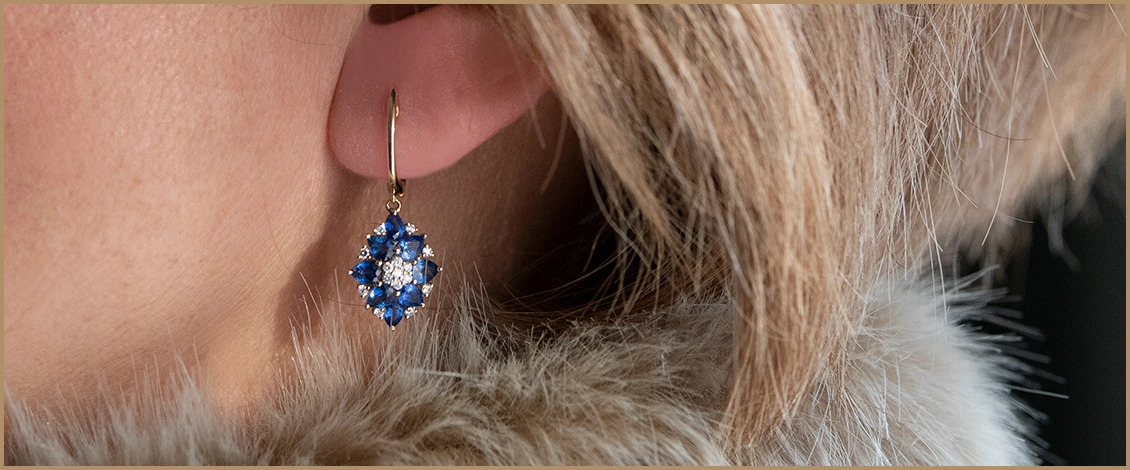
In 1840, a young man gifted a 40-carat oval sapphire brooch to his bride-to-be on the day before their wedding. The deep blue stone surrounded by 14 diamonds was an immediate favorite, and the next day the 20-year-old bride added the brooch to her gleaming white gown as her “something blue.” The young bride was Queen Victoria, and her treasured jewel is now the celebrated Prince Albert brooch. The queen would wear the brooch frequently over the next two decades. Upon Prince Albert’s death in 1861, the gem remained with most of Victoria’s collection, unworn. Queen Victoria had the foresight to designate the brooch as an heirloom of the crown in her will.
Almost a century and a half later, another sapphire made royal history. Luxury jeweler Garrard, the first to be appointed as an official Crown Jeweler to the British royal family in 1843, was summoned to show a collection of engagement rings to another young lady. Charles, Prince of Wales, selected several prospective rings from Garrard’s catalog. Included in the collection was a 12-carat blue sapphire also surrounded in diamonds and, in fact, inspired by the Prince Albert brooch. Prince Charles chose to include the ring because of its resemblance to the brooch which had become one of his mother, Queen Elizabeth’s favorites. His young fiancé selected the sapphire ring because it matched her deep blue eyes. While the ring caused some small controversy, as royal engagement rings are historically bespoke, the couple announced their engagement, Diana wearing her deep blue treasure paired with a simple blue suit. Because they chose a catalog ring, it was conceivable that a member of the public could own an identical piece.
Upon Princess Diana’s death, each of her sons selected a piece of her jewelry as a keepsake. Prince William chose a gold Cartier watch; Prince Harry chose her sapphire engagement ring. In 2010, Prince Harry graciously traded with his brother as he prepared to propose to his future wife, Kate Middleton. Middleton also wore blue to showcase the beautiful ring at the announcement of her engagement to Prince William. As for the Prince Albert brooch, Queen Consort Camilla has been spotted wearing the historic gem, and it’s sure to continue to be a favorite of the Windsor family.
The British Royals are hardly the first to treasures sapphires. Ancient Greek and Roman kings and queens believed sapphires protected against jealousy, infidelity, and other harms. King Solomon wore the legendary “Seal of Solomon,” which was purportedly and inscribed sapphires. Emperor Charlemagne, first ruler of the Western Empire, is said to have a sacred amulet that claimed to contain a relic of the True Cross held by two sapphires. Empress Josephine, wife of Napoleon Bonaparte, also had a blue sapphire engagement ring and a large collection of sapphires. Catherine the Great of Russia received a 337 carat sapphire as a gift. This impressive stone toured with Harry Winston’s “Court of Jewels” collection, an exhibition of famous jewels, and is now owned by a private party.
Sapphires, like rubies, are corundum stones. They come in a variety of shades from violet to the rare “padparadscha” or pinkish-orange. The name for this hue comes from the Sinhalese word for lotus flower. Sapphires are second only to diamonds in hardness. It’s durability makes it ideal for jewelry, but also for industrial uses. Sapphires are instrumental in the manufacture of watch crystals, scientific instruments, and windows.
If you celebrate your birthday in September or just love the gem, sapphires offer unparalleled beauty, history, and lore to any jewelry collection. If you’d like to see what all we have to offer in sapphires, discover that here.



